How AI Can Help Pharma Teams Reduce Training Creation Time

Introduction
AI can reduce pharmaceutical training creation time by 60-80% through automated content generation, personalized learning pathways, and streamlined compliance workflows. For pharma teams facing mounting regulatory demands with constrained resources, artificial intelligence represents the most significant efficiency breakthrough in training development since the adoption of digital learning management systems. Data science plays a crucial role in supporting AI-driven training and operational improvements in pharma, enabling better decision-making and innovation across the industry.
This article covers GxP training development, regulatory compliance content creation, and quality assurance program optimization specifically for mid-size pharmaceutical companies. The target audience includes pharmaceutical training managers, quality assurance directors, and compliance teams that lack extensive internal training infrastructure but must maintain rigorous standards across GMP, GCP, and pharmacovigilance requirements. Medical affairs teams also benefit from AI-driven training and content generation, which streamlines scientific communication and enhances engagement with healthcare providers. We focus on practical implementation rather than theoretical AI capabilities, recognizing that pharma organisations need actionable guidance that respects their operational constraints. AI technologies can enhance the training of healthcare professionals by providing tailored educational content and simulations, improving both knowledge retention and real-world application.
The urgency is clear: regulatory training demands from the FDA, EMA, and MHRA continue expanding while training budgets remain flat. Traditional drug discovery process timelines already strain resources, and training creation can no longer consume weeks of subject matter expert time that could be directed toward patient safety initiatives and drug development activities. Companies like Johnson & Johnson and Merck prioritize AI literacy to maintain competitive advantages, underscoring the importance of adopting AI-driven solutions in training and development.
After reading this guide, you will understand how to:
- Automate content generation from regulatory documents and SOPs
- Implement faster regulatory update workflows using AI systems
- Create personalized training paths that address individual knowledge gaps
- Establish compliance tracking that satisfies 21 CFR Part 11 requirements
- Reduce manual workload while maintaining compliance with regulatory standards
Understanding AI in Pharmaceutical Training Development
Artificial intelligence in pharmaceutical training development encompasses three core applications: machine learning for content personalization, natural language processing for regulatory document analysis, and large language models for automated content generation.
Generative AI refers to systems that can create new content, such as training modules, from basic inputs. Machine learning involves algorithms that learn from data to personalize content and recommend modules based on user roles. Natural language processing enables AI to analyze and interpret regulatory documents for content creation and updates.
These AI capabilities are underpinned by data science, which enables the analysis and interpretation of complex healthcare data to support innovation and operational improvements. Together, these technologies transform how pharma companies create, deliver, and track training across the pharmaceutical value chain.
For healthcare professionals and manufacturing personnel operating under GxP requirements, AI tools address a fundamental challenge: the sheer volume of regulatory content that must be translated into effective training materials while maintaining compliance with evolving regulatory frameworks.
Successful application of AI in pharmacy requires collaboration between pharmacists, data scientists, and developers to ensure solutions are practical, compliant, and effective. Ongoing education on AI and digital skills is essential, starting from initial training and evolving throughout the pharmacy workforce’s career and post-registration curricula.
Content Generation and Automation Using Generative AI Tools
AI generates training materials by analyzing regulatory documents, standard operating procedures, and compliance frameworks to produce draft modules in minutes rather than days. AI-powered platforms can automate the generation of course structures, lesson content, quizzes, and summaries from basic topic inputs. Generative AI tools process vast amounts of unstructured data from FDA guidance documents, ICH guidelines, and internal quality systems to extract key concepts and learning objectives automatically.
This automated content creation forms the foundation for time reduction across the pharmaceutical sector. Predictive modelling is used to anticipate training needs and optimize content creation by analyzing historical data and identifying knowledge gaps. Where traditional approaches required 20-40 hours per training module—including research, writing, formatting, and SME review cycles—AI systems produce initial drafts in under 10 minutes. Human oversight remains essential for validation, but the manual workload shifts from creation to refinement, enabling pharma teams to allocate expert time toward ensuring accuracy rather than basic content development.
Personalized Learning Pathways for Healthcare Professionals
AI models analyze job roles, experience levels, compliance history, and assessment performance to recommend tailored training modules for each learner. Machine learning algorithms identify patterns in completion data and performance metrics to optimize learning sequences, addressing specific knowledge gaps without requiring learners to complete irrelevant content.
This personalization connects directly to content automation: once AI generates baseline training materials, the same systems customize delivery based on individual needs. The result is continuous learning that adapts to each employee’s role in the pharmaceutical value chain, from data scientists in drug discovery to sales representatives engaging in patient interactions.
Specific AI Applications in Pharma Training
Building on the foundational AI capabilities, pharmaceutical companies are deploying these technologies across specific training domains where regulatory complexity and update frequency create the greatest bottlenecks. By enabling researchers to simulate, analyze, and predict outcomes, AI accelerates both research and training processes, reducing risks and resource requirements. AI technologies can reduce training development time by up to 50% and training costs by as much as 30% through automation.
Regulatory Update Processing
AI algorithms monitor regulatory intelligence feeds from FDA, EMA, MHRA, and other authorities to identify changes affecting training content. Natural language processing analyzes new guidance documents, warning letters, and regulatory review outcomes to flag required updates across existing training modules.
Automated compliance tracking ensures that when regulatory standards change, affected training content is immediately identified and queued for revision. This eliminates the manual process of reviewing regulatory updates against training inventories—a task that previously consumed hours of expert time monthly. AI technology enables real time feedback on regulatory changes, significantly reducing the risk that outdated content reaches learners.
GxP Content Standardization
AI systems ensure consistent messaging across GMP, GCP, GLP, and pharmacovigilance training by analyzing content against standardized terminology databases and regulatory requirements. Quality control algorithms flag inconsistencies in language, definitions, or procedural descriptions that could create compliance risks during audits.
This standardization capability builds on regulatory update processing by ensuring that changes propagate consistently across all affected modules. When FDA revises guidance on drug manufacturing practices, AI identifies every training element requiring updates and ensures revised content maintains consistency with related materials covering patient safety, data governance, and trial integrity.
Multi-Language Training Development
For global pharmaceutical operations, AI translation and localization capabilities accelerate multi-language training development while preserving regulatory accuracy. Unlike generic translation services, pharma-trained AI models understand that clinical data terminology, patient data handling procedures, and quality control specifications require precise translation that maintains regulatory meaning.
Generative AI tools produce localized versions of training modules simultaneously, reducing what previously required weeks of translation and back-translation cycles to days. External stakeholders and regional teams receive training content in their native languages without the delays that historically impacted time to market for global pharmaceutical companies.
The Role of Medical Affairs in AI-Driven Training
As the pharmaceutical industry embraces digital transformation, the integration of artificial intelligence (AI) tools into medical affairs training is reshaping how pharmaceutical companies equip their teams and healthcare professionals. Medical affairs functions as a critical bridge between scientific innovation, regulatory compliance, and patient care, making it uniquely positioned to leverage AI-driven training for maximum impact across the pharmaceutical value chain.
AI tools—ranging from large language models to advanced natural language processing and computer vision—empower medical affairs teams to analyze vast amounts of clinical data and unstructured information. This enables the rapid development of tailored training modules that address specific knowledge gaps, support medication adherence, and ultimately drive better patient outcomes. By collaborating with data scientists, medical affairs professionals can recommend tailored training modules based on data-driven insights, ensuring that content is both relevant and aligned with the latest developments in drug discovery and drug development.
A key advantage of adopting AI in medical affairs training is the ability to provide real-time feedback and continuous learning opportunities. AI systems can monitor healthcare professionals’ interactions, assess performance, and suggest targeted learning interventions, all while maintaining compliance with evolving regulatory requirements. This not only reduces training costs and accelerates the traditional drug discovery process but also enhances the ability of pharma companies to identify the most promising leads and support researchers in bringing new drugs to market more efficiently.
However, the use of artificial intelligence in medical affairs training also introduces new challenges around data security, patient safety, and risk management. Pharmaceutical companies must implement robust data governance frameworks to protect patient data and proprietary information, ensuring that AI models operate within strict compliance boundaries. Medical affairs teams need to be trained not only in the use of AI tools but also in understanding their limitations, ensuring that human oversight remains a key component of all AI-driven processes.
The integration of AI capabilities into medical affairs training also supports the development of digital health solutions, enabling pharmaceutical companies to enhance patient interactions and demonstrate a commitment to innovation and patient-centricity. By leveraging AI technology, pharma organisations can gain a competitive edge, improve operational efficiency, and deliver measurable outcomes that benefit both patients and the broader healthcare ecosystem.
Implementation Framework for AI Training Solutions
Moving from understanding AI capabilities to practical deployment requires a structured approach that respects the pharmaceutical industry’s unique regulatory environment and validation requirements.
Step-by-Step Implementation Process
Pharma companies should implement AI training solutions when current training creation timelines delay compliance updates, SME time is consumed by repetitive content tasks, or training costs exceed sustainable levels without measurable outcomes improvement.
- Audit existing training content to identify repetitive tasks consuming SME time, including regulatory update processing, content standardization, and multi-format development—these represent immediate automation opportunities for AI tools.
- Select AI tools compatible with GxP requirements, evaluating vendors for 21 CFR Part 11 compliance, data security protocols, validation documentation, and the ability to maintain audit trails for all AI-generated materials.
- Pilot AI content generation with non-critical training modules such as general compliance refreshers or soft-skill development, allowing the team to establish validation workflows without risking critical GMP or pharmacovigilance content.
- Validate AI-generated content through SME review checkpoints, documenting the review process to satisfy regulatory review requirements and building the evidence base for expanded deployment.
- Scale successful pilots across all training programs using established validation protocols, extending AI capabilities to GxP-critical content once workflows prove reliable and compliant.
AI Tool Comparison for Pharma Training
| Criterion | Content Generation Platforms | AI-Enhanced LMS | Compliance Tracking Systems |
|---|---|---|---|
| GxP Validation Status | Varies; some offer validation packages | Generally validated for record-keeping | Most offer 21 CFR Part 11 compliance |
| Content Accuracy | Requires SME validation; 70-80% accuracy on drafts | Focuses on delivery rather than creation | Limited content generation capability |
| Integration Capabilities | API connectivity varies; check legacy LMS compatibility | Native integration with training records | Strong regulatory database connections |
| Cost Efficiency | Highest ROI for content-heavy organizations | Moderate; best for personalization needs | Essential for audit preparation |
| Mid-size pharma companies typically benefit from starting with compliance tracking systems that offer content generation features, providing immediate regulatory update capabilities while building toward full content automation. Organizations with significant training volume should evaluate dedicated content generation platforms, accepting higher implementation complexity for greater cost savings over time. |
Measuring Success and ROI of AI-Driven Training Solutions
For pharmaceutical companies investing in artificial intelligence (AI) and machine learning (ML) to transform their training programs, measuring success and return on investment (ROI) is essential. In an industry where operational constraints, regulatory demands, and patient safety are paramount, understanding the tangible impact of AI-driven training solutions ensures that resources are allocated effectively and that the adoption of new technologies delivers measurable value.
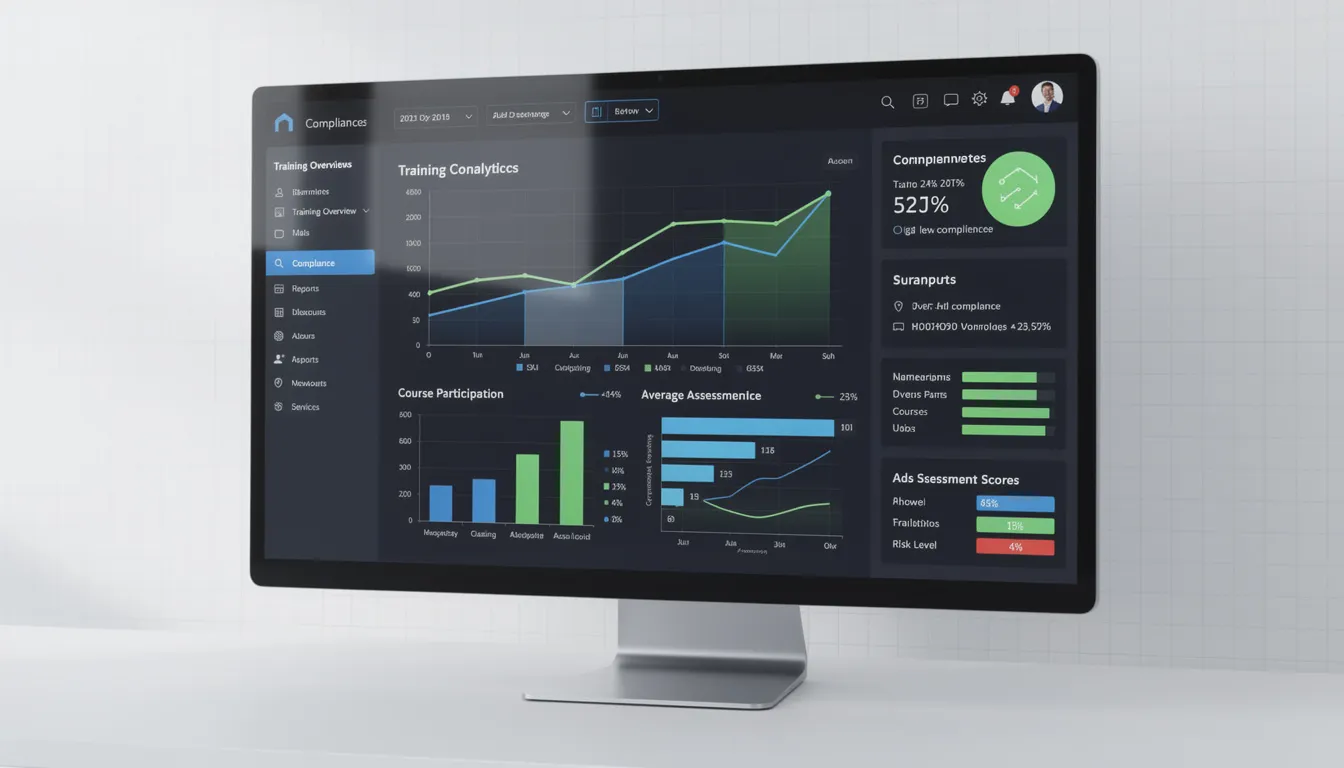
Key performance indicators (KPIs) for AI-powered training in the pharmaceutical industry include time to market for new drugs, medication adherence rates, patient safety metrics, and overall training costs. By leveraging AI tools, pharma teams can analyze vast amounts of clinical data to identify knowledge gaps, optimize tailored training modules, and ensure that healthcare professionals are equipped with the latest information relevant to their roles in the pharmaceutical value chain. This data-driven approach not only accelerates the traditional drug discovery process but also enhances quality control and trial integrity throughout drug development and clinical trial phases.
AI systems—powered by generative AI tools, large language models, and advanced machine learning algorithms—enable continuous learning and real-time feedback. These technologies help data scientists and training managers recommend tailored training modules that address specific needs, improve patient interactions, and support better patient outcomes. For example, natural language processing can analyze unstructured data from regulatory updates or patient care scenarios, while computer vision can support training in disease progression assessment or medication administration.
Measuring ROI also involves tracking cost savings achieved through reduced manual workload, faster content updates, and improved resource allocation. Pharmaceutical companies adopting AI-driven training solutions often see significant reductions in training costs, freeing up expert time for higher-value activities such as risk management, data governance, and maintaining compliance with evolving regulations. Enhanced data security and protection of proprietary data further contribute to the overall value proposition, safeguarding intellectual property and supporting digital health initiatives.
Collaboration between healthcare professionals and data scientists is a key component of successful AI training programs. By working together to analyze performance data and identify the most promising leads for improvement, pharma companies can continuously refine their training strategies, address emerging knowledge gaps, and maintain a competitive edge in the pharmaceutical sector.
Ultimately, the success of AI-driven training solutions is measured not just by efficiency gains, but by their impact on patient care, regulatory compliance, and business outcomes. By adopting AI technology and embedding continuous measurement into their training operations, pharmaceutical organizations can ensure that their investments drive better patient outcomes, support innovation, and strengthen their position across the pharmaceutical value chain.
Common Challenges and Solutions in Data Security
Despite clear benefits, pharma teams consistently encounter obstacles when adopting AI for training development. The high costs and lengthy timelines associated with bringing a single drug to market highlight the importance of improving clinical development efficiency. These challenges are predictable and addressable with proper planning.
Regulatory Validation of AI-Generated Content
Establish validation protocols that treat AI as a drafting tool requiring human oversight at defined checkpoints. Document the validation workflow including SME review criteria, approval authorities, and evidence of human verification for audit purposes. Maintain detailed audit trails for all AI-generated materials, recording prompt inputs, initial outputs, human modifications, and final approval—satisfying regulatory frameworks that require demonstrated control over content development processes.
Integration with Existing Learning Management Systems
Choose AI tools with robust APIs that support bi-directional data exchange with current LMS infrastructure. Verify that selected solutions maintain 21 CFR Part 11 compliance for electronic records, ensuring that AI-generated content and associated metadata satisfy the same requirements as manually created training materials. Consider middleware solutions if direct integration proves technically complex, prioritizing data security and proprietary data protection throughout the integration architecture.
Staff Resistance to AI-Powered Training Tools
Implement a change management program that positions AI as an enhancement tool that reduces administrative tasks rather than replacing training expertise. Demonstrate clear ROI through pilot programs, showing how AI-generated first drafts enable SMEs to focus on higher-value activities like ensuring patient outcomes improvements and better patient outcomes alignment in training content. Provide immediate feedback on time savings to build momentum and organizational support for expanded deployment.
Conclusion and Next Steps
AI reduces training creation time by 60-80% while enabling pharmaceutical companies to maintain rigorous GxP compliance standards. Through automated content generation, personalized learning pathways, and streamlined regulatory update processing, pharma teams can redirect resources from manual content development toward innovation and improved outcomes for patients. Additionally, AI can help identify and prioritize drug candidates, accelerating the process of bringing new therapies to market by streamlining the identification and development of promising compounds.
Immediate actionable steps:
- Conduct a training content audit identifying modules requiring frequent updates, high SME time investment, or multi-format development—these represent highest-value automation targets
- Research AI tools meeting pharmaceutical regulatory requirements, prioritizing 21 CFR Part 11 compliance and GxP validation documentation
- Identify a pilot training program for initial AI implementation, selecting content that allows workflow validation without risking critical compliance areas
AI can also analyze vast datasets of biological and chemical information to identify potential drug targets and predict the properties of candidate molecules. By accelerating the process of identifying compounds for possible new drugs, AI enables researchers to focus on the most promising leads, streamlining the drug discovery process and reducing the time and cost associated with experimental testing.
For organizations seeking to extend AI beyond training development, related applications include AI in audit preparation, quality management system optimization, and pharmacovigilance training automation—each offering additional efficiency gains across the pharmaceutical value chain while supporting digital transformation initiatives and building competitive edge in the pharma industry.
Additional Resources
- FDA Guidance on Computer Software Assurance for validation frameworks applicable to AI tools in regulated environments
- ICH E6(R3) guidance for GCP training content alignment with current clinical trial requirements
- ISPE GAMP 5 guidelines for applying risk-based approaches to AI software validation
- Templates for AI content validation protocols including SME review checklists and approval documentation
- Vendor directories for pharma-compliant AI training platforms with current regulatory status and validation package availability